FacebookBuys Spreadsheet Winter Scarf Guide
FacebookBuys Spreadsheet Winter Scarf Guide
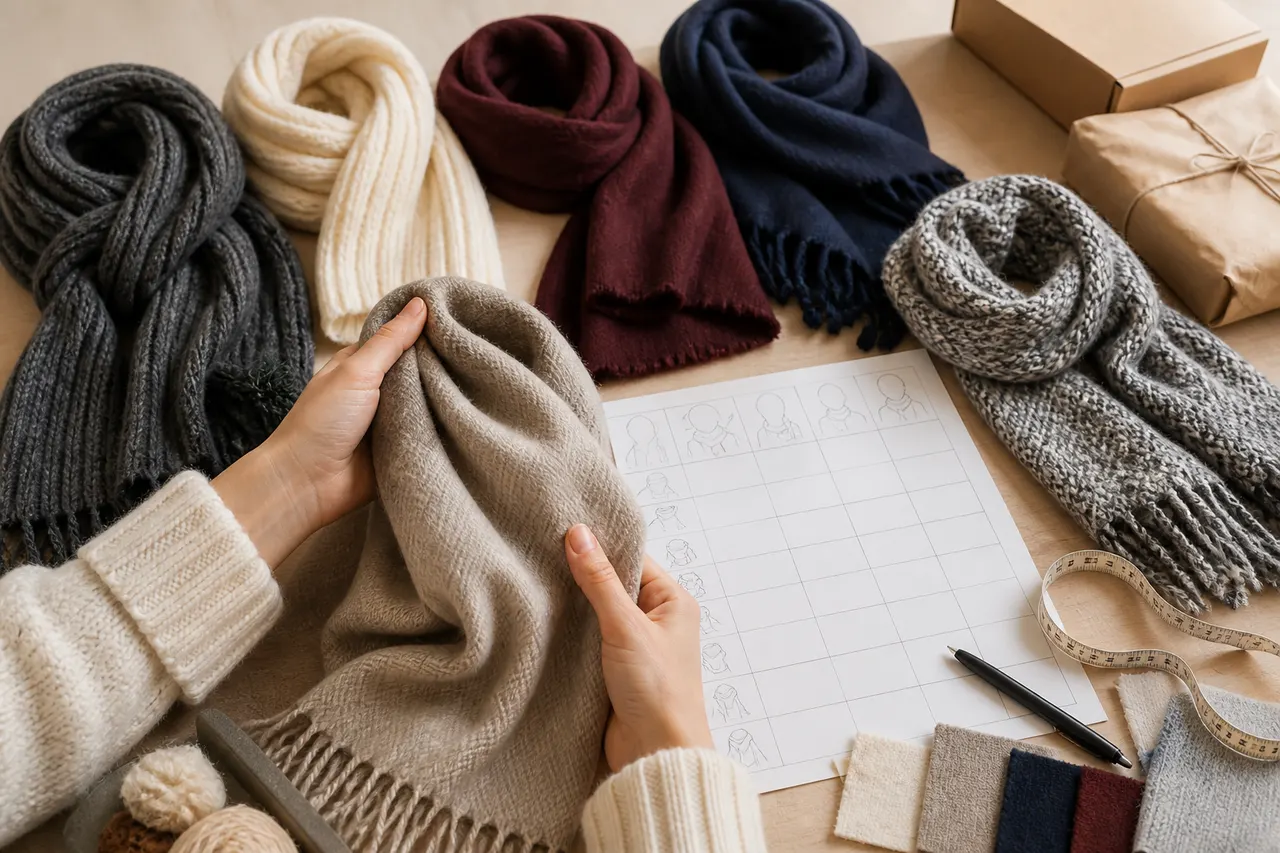
When choosing a winter scarf, the most common mistake is to look at color and style first, then try to convince yourself it's warm enough. A more reliable approach is to first turn your usage scenarios, wrapping methods, and acceptable care difficulty into filtering criteria, then use the facebookbuys Spreadsheet to narrow down candidates.
The specific problem this article solves: how to build a candidate list based on the product names, sizes, material labels, images, and descriptions visible in the Spreadsheet, and determine which information must be re-verified before ordering. After reading, you can organize a batch of scarf entries into a small number of candidates to verify, rather than deciding based solely on thumbnails.
This article is not suitable for readers who need instant confirmation of prices, inventory, seller reputation, or delivery times. Such information is time-sensitive, and this article does not have specific product samples that can be independently verified. Regarding prices, inventory, shipping, taxes, return conditions, and product link status, always refer to the actual page display and customer service confirmation as of August 27, 2026, before placing an order.
First determine warmth, commuting, or styling needs
Pick one primary task first; don't try to simultaneously pursue extreme warmth, lightweight portability, and complex styling. These three are not entirely conflicting, but different priorities will change the filtering results. 🧣
If mainly for warmth in cold weather, prioritize recording coverage area, thickness cues, weave tightness, and whether it can stably cover the neck. A fluffy-looking image does not prove warmth; you still need to verify material composition, weight, or thickness descriptions.
If mainly for commuting, focus on whether it stays in place after wrapping, fits inside your coat collar, resists wrinkling, and whether care requirements match your daily routine. Styles that require frequent hand washing, flat drying, or special protection against snags may not be suitable for high-frequency use.
If mainly for styling, you can increase the weight of color, texture, and drape, but still set a minimum comfort threshold, such as not accepting obvious scratchiness risk, not accepting only one wrapping method, or not accepting a width that clashes with your regular coats.
Before looking at the Spreadsheet, write down one sentence:
"I need a scarf primarily for __, most often using the wrap, must satisfy , can accept , cannot accept __."
This sentence will be the basis for eliminating candidates later.
What information the Spreadsheet can provide, and what still needs verification
The facebookbuys Spreadsheet is better suited for the task of "discovering and organizing candidates" rather than replacing product page verification. Titles, images, categories, sizes, or material text in the table can help with sorting, but whether fields are complete, still valid, and consistent with the current product page must be confirmed item by item. 🔎
You can first extract the following information from the table:
Product name or identifiable number
Currently accessible product page entry
Labeled length and width
Material name, composition ratio, or fabric keywords
Color, pattern, and edge structure
Care instructions
Weave and details directly observable in images
The following information cannot be concluded solely from table titles or thumbnails:
Actual touch, scratchiness, and static performance
Real thickness, weight, and warmth in low temperatures
Whether the composition label matches the description
How image colors appear in natural light
Current inventory, price, shipping, taxes, and return window
Whether the product belongs to a specific brand or has authenticity guarantees
If an entry only has a blurry image, vague name, or cannot be matched to a valid product page, mark it as "insufficient information" rather than filling in the blanks yourself.
Set filtering criteria based on length, width, and common wrapping methods
Size should serve the wrapping method. First determine how much usable length you need based on your common wrapping method, then consider whether fringe or decorative edges take up part of the labeled length.
Single loop draping usually requires the scarf to retain length at both ends after wrapping around the neck; double loop wrapping needs more allowance; shawl-style use depends more on width; tucking into a coat collar requires preventing excessive width and thickness that cause bulk. Don't apply a one-size-fits-all dimension here, because height, neck circumference, coat collar style, and desired hanging position all change the result.
Use a soft tape measure or an existing scarf to take personal measurements:
Wrap your existing scarf in your most common way.
Measure the effective length and width needed to complete that wrap.
Record how much allowance you want to add or reduce.
Check whether candidate sizes include fringe.
Mark entries with missing width or unclear units as pending confirmation.
Don't convert between centimeters and inches by feel, and don't treat "one size" as complete dimensions. If the page dimensions differ from the Spreadsheet, pause the order and first confirm which data corresponds to the current batch.
Check material labels, weave, and edge structure
Material judgment should distinguish "explicit composition" from "style description." "Cashmere feel," "wool style," and "soft touch" only describe appearance or marketing positioning and cannot replace fiber composition and proportions.
When reviewing candidates, record in the following order:
Whether full fiber names are provided
Whether proportions of each component are listed
Whether the product description matches label detail images
Whether there are separate descriptions for blends, linings, or decorative parts
Whether washing, bleaching, ironing, and drying requirements are given
Weave also affects usage. Looser weaves may be more easily snagged by accessories, zippers, or Velcro; tighter weaves are usually easier to tuck into coats but still need to be considered with thickness; obvious fuzzy surfaces may shed or stick to dark clothing. Here, you can only identify structural cues from clear detail images, not claim to have verified feel or durability.
Edges are also worth listing separately. Long fringe may affect effective length and is more likely to tangle; raw edges need confirmation as design intent; bound or rolled edges should be checked for flatness. If the front and back differ in color or texture, also consider whether your common wrap will expose an undesired side.
Use a candidate table to compare thickness info, care requirements, and pairing range
The purpose of a candidate table is not to calculate a seemingly precise total score, but to make missing information obvious. It's recommended to keep three to five candidates first, then verify item by item. 📋
Candidate | Wrap & Size | Material Evidence | Thickness Cues | Care Requirements | Pairing Range | Current Conclusion |
|---|---|---|---|---|---|---|
A | Does it meet main wrap; is fringe included | Are composition and ratio clear | Only record page text and visible structure | Is it feasible for daily routine | Can it pair with regular coats | Keep or eliminate |
B | Are units clear; is width enough | Do label images match description | Is weight or thickness info missing | Does it need special care | Are color and texture limited | Pending verification |
C | Do page and table sizes match | Only vague marketing words? | Are images clear enough | Any shrinkage or flat dry hints | Can it cover two or more scenarios | Insufficient information |
When comparing, use the rule of "hard conditions first": if any unacceptable condition appears, eliminate immediately; candidates lacking key data go to pending verification; only after all hard conditions are met, compare color, price, or decorative details.
Pairing range should also be recorded specifically. For example, "pairs with dark commuting coats and short down jackets" is more useful than "versatile." If it can only match one specific coat, consider its actual frequency of use rather than being influenced by a single styling photo.
Check label, detail images, and description consistency before ordering
After entering a specific product page, complete a consistency check:
Confirm the page is still accessible and has a clear product name and enough identifying information.
Compare style, color, size, and material fields between the Spreadsheet and product page.
Look for composition labels, care labels, close-up weave images, and edge detail images.
Check whether different color options share the same set of images or descriptions.
Confirm current price, inventory, size/color selection, and link status.
Read current shipping, expected handling, tax notes, and return conditions.
Do not proceed based solely on guesses in these situations:
Title states one material but detail page lacks ratio or label evidence
Spreadsheet and product page sizes differ
Main image shows fringe but detail or option images do not
Multiple colors share one image that may be heavily color-adjusted
The page cannot clearly identify the specific style corresponding to the current selection
Return policy does not cover material or color discrepancy disputes
You may save necessary page screenshots or field records, but should cover account, address, phone, order number, and payment information.
Boundaries for logistics, returns, and physical color differences
Scarves usually do not require complex size fitting, but that does not mean low purchase risk. Puffy styles may create larger package volume, and fringe and loose weaves also need more careful packaging. Whether combining packages saves money must be calculated based on actual package weight, volumetric billing rules, route restrictions, and fixed fees, not just by product category.
Before logistics decisions, verify:
Whether the route charges by actual weight or volumetric weight
Whether packaging will compress or snag the fabric
Whether combined package total value increases risk of loss or damage per shipment
Whether the destination country taxes, and declaration requirements
When the current return window starts: order date, delivery date, or warehouse processing date
For customs clearance, declare the product category, quantity, and value truthfully, and comply with the destination country's import regulations. Do not evade taxes or inspections by under-declaring value, mislabeling product names, or artificially splitting orders.
Set a boundary for color difference as well. Screens, lighting, and post-processing affect color display, so images can only help determine the approximate color family. If color must precisely match a specific coat, prioritize natural light photos, clear color codes, or verifiable descriptions; without such information, treat color difference as an accepted cost rather than assuming the physical item will be identical.
Before returns, also confirm what rules apply separately for material mismatch, size deviation, damage, wrong color, and subjective dislike, what photos are needed, and what time frame the warehouse or platform requires. This article does not replace the real-time policy pages or order page notices on facebookbuys.com.
Organize final candidates and complete next-step verification
Final candidates should not just be "three favorites" but each should have a clear status:
First choice: size fits main wrap, material and care info relatively complete, page fields consistent
Backup: basically meets needs but has one acceptable uncertainty
Pending verification: missing composition ratio, effective size, detail images, or current transaction conditions
Eliminated: triggered hard exclusion or cannot match a valid product page
After completing the list, perform final verification only on first choice and backup: record price, currency, inventory, shipping, tax notes, return rules, and link status as displayed on August 27, 2026; if page information is still insufficient, ask the seller or platform for specific fields. If the answer cannot form stored evidence, keep the "unverified" status.
This route may not save a fixed amount that can be calculated without sample data, but it reduces wrong order costs caused by size not fitting the wrap, excessive care requirements, or unclear material descriptions. Actual savings should be calculated item by item based on the eliminated candidates' landed cost, return fees, and non-refundable risks.
The added cost is filtering time and the possibility of inventory or price changes during verification. It suits people who value warmth, wrap adaptability, and material transparency, and are willing to re-check pages before ordering. It is not recommended for those who want to buy immediately, cannot accept any color difference, or need physical touch to judge comfort. ✅
Browse our latest products and find your next favorite item.