facebookbuys Thermal Base Layer Guide
facebookbuys Thermal Base Layer Guide
facebookbuys Thermal Base Layer Guide
Winter thermal base layers aren't always better when they're thicker. The real question is: for commuting, outdoor activities, or sitting indoors for long periods, how do you choose a base layer that keeps you warm without sacrificing comfort due to sweat, tightness, or bulky layering?
This guide is for shoppers on facebookbuys who are looking for winter thermal base layers but don't know how to compare thickness, fit, and material from product descriptions. After reading, you'll be able to build a shortlist and decide which items are worth verifying further. This guide is not for people who need professional mountaineering gear, protective clothing, medical warming products, or equipment for extreme cold environments.
Information verified on: September 3, 2026. There aren't enough accessible product samples at the moment to confirm real-time prices, stock, materials, sizes, reviews, or delivery promises for specific items on facebookbuys, so this guide won't recommend particular styles. All dynamic information should be based on the order page and checkout page.
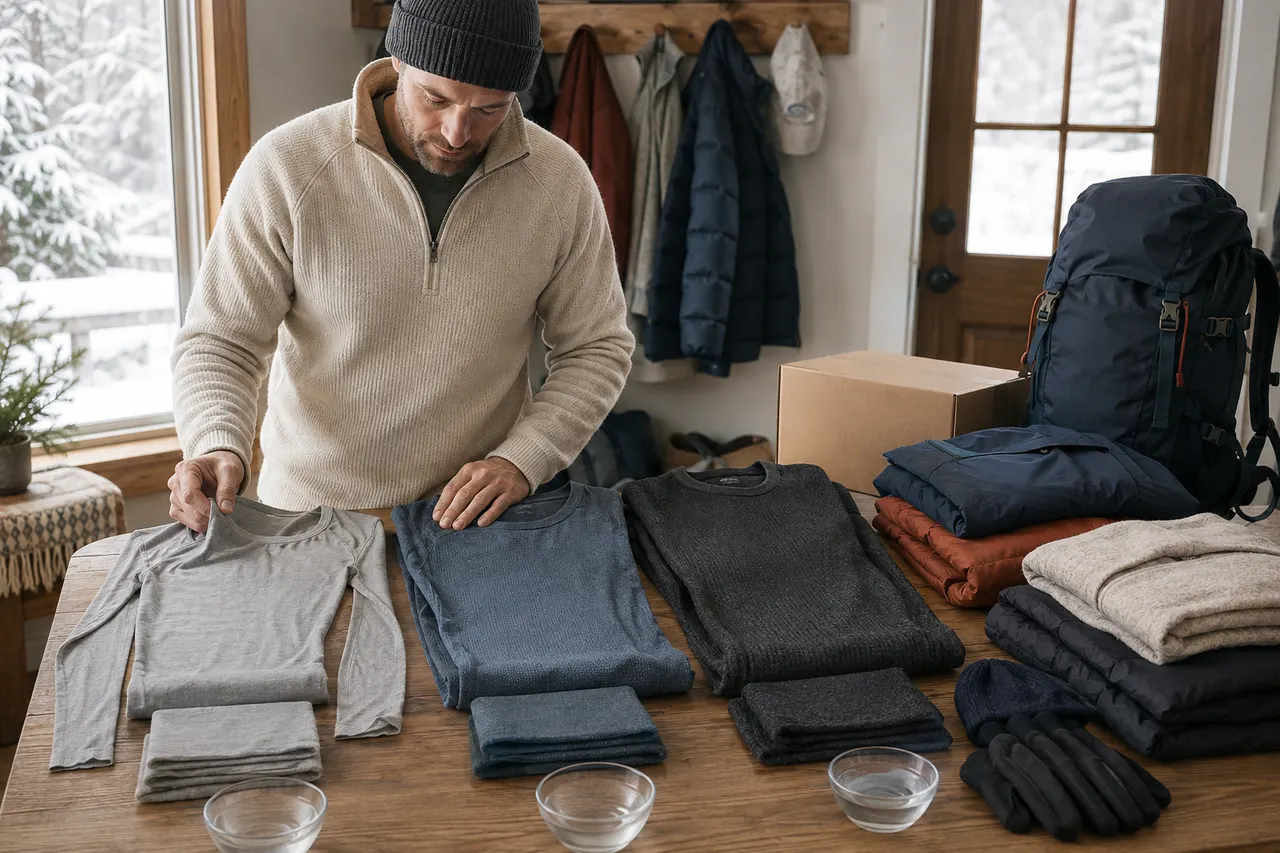
First, define your warmth task by commuting, outdoor, or sitting
Write down the main scenarios your thermal base layer needs to handle. Don't try to achieve all performance features at once. 🧭
Daily commuting: Focus on not being bulky under shirts, knits, or jackets, with a neckline that doesn't show, and not feeling stuffy after entering heated indoor spaces.
Outdoor walking or sports: Focus on wicking sweat quickly, reducing clamminess, and allowing free movement of shoulders, arms, and knees.
Sitting indoors for long periods: Focus on consistent warmth and comfortable touch; slightly thicker fabric is acceptable, but avoid prolonged pressure at the waistband and cuffs.
Frequent switching between indoors and outdoors: Prioritize medium thickness and easily adjustable layering combinations; don't rely on a single very thick base layer.
If your day includes multiple scenarios, base your choice on the stage with the highest activity level and the most sweating, then add warmth for stationary periods through mid layers and outer layers.
What facebookbuys visible information can support filtering
On facebookbuys product pages, only information that is actually displayed and mutually consistent can be used as filtering criteria. Terms like "fleece-lined," "heat-generating," or "thermal" in product titles only help with initial categorization and cannot alone prove insulation ability.
Prioritize looking for the following evidence:
Clear images of front and back views, neckline, cuffs, waistband, and leg openings.
Fabric composition and fiber percentages, not just vague descriptions like "comfortable fabric."
Garment size charts in centimeters or inches, with measurement positions explained.
Conditional information on thickness, inner structure, stretch direction, and applicable temperature.
Washing, drying, and bleaching restrictions.
Return and exchange conditions, return window, return address, and non-returnable situations.
Shipping routes, shipping costs, estimated delivery times, and tax explanations shown at checkout.
If the page only has promotional images, broad adjectives, or parameters that can't be matched to specific variants, mark those fields as "unverified" instead of filling them in yourself. Screenshots should also include product name, variant, and recording date to avoid mixing information from different styles later.
Distinguish fit, neckline, and coverage of base layers
Base layers need to be close to the skin, but "close-fitting" does not mean "compression." A proper fit should maintain coverage when raising arms, bending over, and sitting down, without noticeably digging into the armpits, waist, or thighs.
Crew necks are usually easy to layer under casual tops, but the neckline may show under shirts; low or wide necklines are more discreet but reduce neck and chest coverage; high necks add warmth but may feel stuffier indoors or during high activity. Use the neckline of your usual outer layers as a reference before buying.
Top hems should be long enough to tuck into pants and not easily ride up when bending. For bottoms, check the front and back rise, leg length, and ankle cuffs. One-piece or extra-long coverage styles can reduce drafts at the waist, but may be less convenient for putting on, taking off, and bathroom breaks.
To judge layering space, wear your current base layer, then put on the planned mid layer, and do arm raises, shoulder hugs, deep squats, and sitting movements. If movement is already restricted, don't choose an even thicker or looser inner layer.
Judge thickness and moisture-wicking needs based on activity level
The higher the activity level, the more important sweat management is. A thick base layer soaked with sweat can quickly make you feel cold after stopping activity, so for outdoor brisk walking, cycling, or carrying, don't just look at "thick." 🔥
Main scenario | Base layer focus | Common risks | Suggested pairing |
|---|---|---|---|
Short commute, long indoor time | Thin to medium thickness, discreet neckline | Overheating after entering heated spaces | Base layer plus removable mid layer |
Long outdoor walking | Moisture-wicking, freedom of movement, moderate warmth | Wet and cold after sweating | Base layer plus insulating mid layer and windproof outer layer |
Low-activity sitting | Medium to slightly thick, full coverage | Localized tightness, stuffy fabric | Comfortable base layer plus loose insulating layer |
Frequent indoor-outdoor switching | Medium thickness, easy adjustment | Repeated sweating due to temperature differences | Keep base layer stable, adjust outer layers |
If the product page doesn't provide fabric weight, thickness comparison, or structural details, you can't judge actual thickness from images alone. Fleece-lined interiors may increase warmth when stationary, but may also add bulk, drying time, and indoor stuffiness.
Check composition labels, size charts, and care instructions
Composition doesn't determine a single "good or bad," but rather trade-offs among warmth, wicking, feel, stretch, and durability. Synthetic fibers generally dry faster, wool fibers are often used for combined warmth and moisture regulation, and cotton may feel soft, but usually dries slowly after heavy sweating. For blended fabrics, check the percentages, because a small component doesn't represent the main performance of the garment.
Don't infer materials from images, and don't treat marketing names like "wool-like" or "velvet-like" as fiber composition. If the page doesn't list full composition, record the evidence gap clearly in your shortlist.
Size checking can follow this order: 📏
Measure chest, waist, hips, shoulder width, sleeve length, inseam, etc., matching the data in the product's size chart.
Confirm whether the page lists body measurements or garment flat measurements.
Check units and note any manual measurement error statements.
Compare your measurements with the target size, while allowing room for movement and layering.
If your top and bottom fit different sizes, look for sets or separate pieces that can be chosen individually.
Care instructions also affect long-term use costs. Items that require cold water washing, no tumble drying, or flat drying may not suit households that rely on dryers or need frequent washing. If care label images are missing, confirm with the seller before ordering; if you can't confirm, treat it as a risk.
Use a shortlist to record layering space and evidence gaps
Don't just save product links. Create the same fields for each candidate so you can see which one has more complete information:
Product name and specific color, size, or set variant.
Planned usage scenario and expected activity level.
Neckline, top hem, leg cuff, and waistband structure.
Claimed composition, percentages, thickness, or weight.
Size chart type, units, and your corresponding size.
Whether there's enough room to pair with your existing mid layer.
Washing and drying restrictions.
Product price, shipping, taxes, and verification date.
Return window, return cost, and non-returnable conditions.
Missing images, parameters, or seller responses.
When a field can't be verified, write "unknown" instead of substituting a plausible value. A candidate with complete information and a slightly higher price can sometimes be easier to control total cost than a cheaper one lacking size, composition, and return details.
Before ordering, check returns, shipping, and description boundaries
Reopen the product page and checkout page before ordering, because prices, stock, available sizes, shipping, and policies may have changed. 🧾
Key checks:
Are the colors, sizes, top/bottom combinations, and quantities in your cart correct?
Are pre- and post-discount prices and currencies clear?
Is shipping estimated on the product page or calculated after entering your address?
Is the estimated delivery time processing time, transit time, or combined?
Are taxes included, and might the destination country levy additional fees at import?
Are base layers restricted from returns for hygiene reasons?
What evidence is needed for size mismatch, description mismatch, damage, and wrong items?
Who bears return shipping costs, and are refunds returned to the original payment method?
Don't treat estimated delivery dates as guaranteed arrival dates, and don't ignore cross-border return costs just because the item is cheap. After receiving the item, verify the variant, size label, composition label, and appearance while keeping tags, packaging, and hygiene intact. If you find problems, save clear records of the product page, packaging, shipping label, and problem areas, while covering up address, phone number, order number, and payment information.
Select the next candidate that fits your current clothing system
The final candidate shouldn't just be the "thickest" or "cheapest" one; it should meet the three most critical conditions for your current scenario: not accumulating excessive sweat during activity, being able to add warmth through layering when stationary, and not having a fit that hinders movement or outerwear.
Candidates suitable for further order verification should have corresponding composition labels, actionable size charts, clear variants, and acceptable return conditions. If this information is missing, the next step isn't immediate payment, but asking the seller for specific fields or switching to a product with more complete evidence.
This selection method may save repeated purchase and return expenses caused by size errors, layering failures, or care condition mismatches, but without real-time product samples, we can't provide a reliable specific savings amount. Its cost is the upfront time for measuring, recording, and verifying. It's best for buyers who need cross-border purchases, value layering compatibility, and are willing to compare evidence; it's not recommended for those who need urgent delivery, can't afford return shipping, or need professional extreme-cold and safety protection based only on generic product descriptions.
Agent platform shopping FAQ
1. What kinds of products can be found on facebookbuys.com?
facebookbuys.com carries a broad selection of product lines, covering shoes, T-shirts, sweaters, hoodies, jeans, sweatpants, shorts, beach shorts, factory clearance goods, down jackets, baseball jerseys, shirts, hats, jewelry, bags, electronics, sunglasses, socks, underwear, and popular collectible items.
2. What is the best way to evaluate product quality on facebookbuys.com?
Look over the QC images when judging quality on facebookbuys.com and avoid depending only on factory-provided photos since those are usually edited. Check the QC images to see if the product matches your detailed specifications before you commit to a purchase.
You should also steer clear of extremely low-priced products on facebookbuys.com, as they are typically not high quality.
Browse our latest products and find your next favorite item.